
When video of a sleek, quick-footed animal darting through the streets of Abshway, a town in Egypt’s Fayoum governorate, began circulating on social media on 18 July, panic followed close behind. Some residents assumed a dangerous predator was on the loose.
Environmental and veterinary authorities in Fayoum soon identified the animal as Herpestes ichneumon, the Egyptian mongoose, and said it posed no threat to people, moving to end the online speculation.
Built for the hunt
The Egyptian mongoose is a lean, low-slung carnivore built for speed and stealth, with a body 48 to 60 centimeters long, a nearly equal-length tail of 33 to 54 centimeters, and a weight of just 1.7 to 4 kilograms.
Its slender frame, tapered muzzle, and small rounded ears give it an agile profile, while 35 to 40 teeth, including specialized shearing incisors, allow it to slice through prey as tough and elongated as snakes. With a coarse coat, ranging from gray to reddish-brown and speckled with brown or yellow, it can camouflage in scrubland and farmland, set off by a black-tipped tail and bare patches of skin on the hind feet and around the eyes.
Active in the daytime and moderately social, the mongoose lives in small groups of one to seven, consisting typically of a single male, several females, and their young, with males dispersing before age one while females remain in the group. In the wild, it survives roughly 12 years, though captive individuals have lived past 20.
As opposed to mainstream belief, the Egyptian mongoose is far from a threat, experts say. The animal is one of the country’s most effective natural defenses against venomous snakes and crop-damaging rodents, with its own place in the food chain —a role it has played in the Nile Valley for thousands of years, long enough to have earned a place in the iconography of ancient Egypt.
A native predator
The Egyptian mongoose is a medium-sized carnivorous mammal found widely across the Nile Valley, the Nile Delta, and along the Red Sea and Mediterranean coasts, typically favoring farmland, canal banks, and areas with dense vegetation near lakes and nature reserves, such as these conditions well met in Fayoum, with its extensive irrigated fields and proximity to protected wetlands. Officials attributed the animal’s appearance in residential areas to urban expansion pushing into agricultural and desert land, noting that many residents are simply unfamiliar with a species that has quietly shared their landscape for generations.
A reputation predating the pyramids
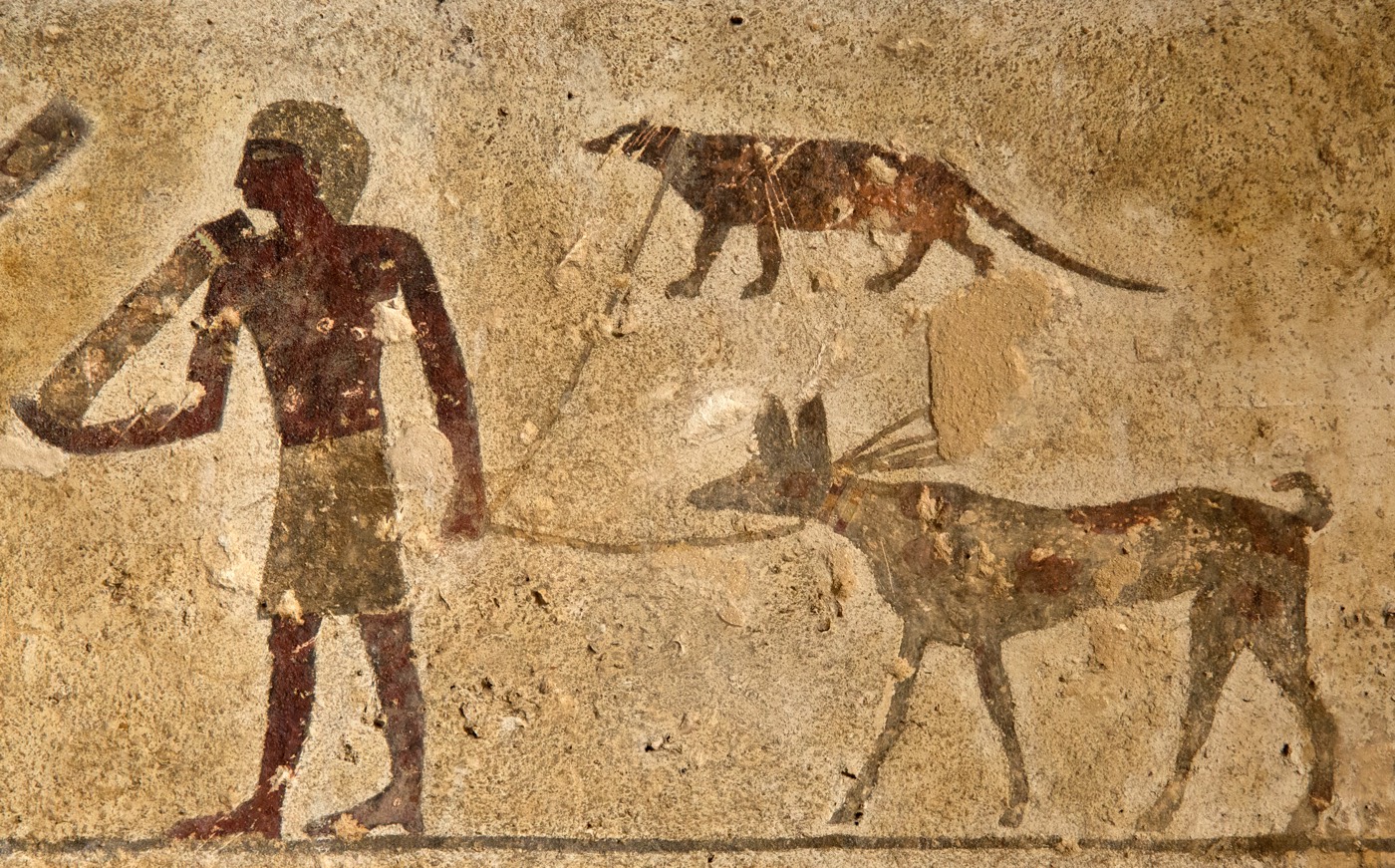
The mongoose’s role as Egypt’s snake hunter is historic. Ancient Egyptians revered the animal, sometimes mummifying it and casting bronze statuettes in its likeness. In mythology, the mongoose was linked to the sun god Atum, who was said to take its form nightly to battle Apep, the serpent embodiment of chaos.
Its enduring nickname, “Pharaoh’s rat,” survives in European languages to this day. In French, it is called ‘rat des pharaons,’ continuing a legacy of its long association with royal and religious imagery. Classical writers embellished the legend further. Pliny the Elder, a Roman author, naturalist, and scientist, described it coating itself in mud to battle crocodiles, while the Greek geographer Strabo wrote that Egyptians venerated the ichneumon.
A quieter presence than it once was
Despite that ancient standing, the mongoose is far less visible in Egyptian fields than it used to be. Conservationists say its numbers have fallen over the past half-century, largely because of the heavy use of agricultural pesticides, which poison the rodents and insects the mongoose feeds on. That scarcity could be part of why its recent sighting in Fayoum drew so much attention, as it was a rare and welcome glimpse of an old ally that has largely receded from view.