
By Joshua Tyler
| Updated

A few months ago, I coined the term “slop eater” to explain people who mindlessly consume content without regard to whether it’s any good. That term has now become widely used because it’s clear that slop eaters are a problem, and they degrade the overall quality of the entertainment you watch because they don’t support any standards.
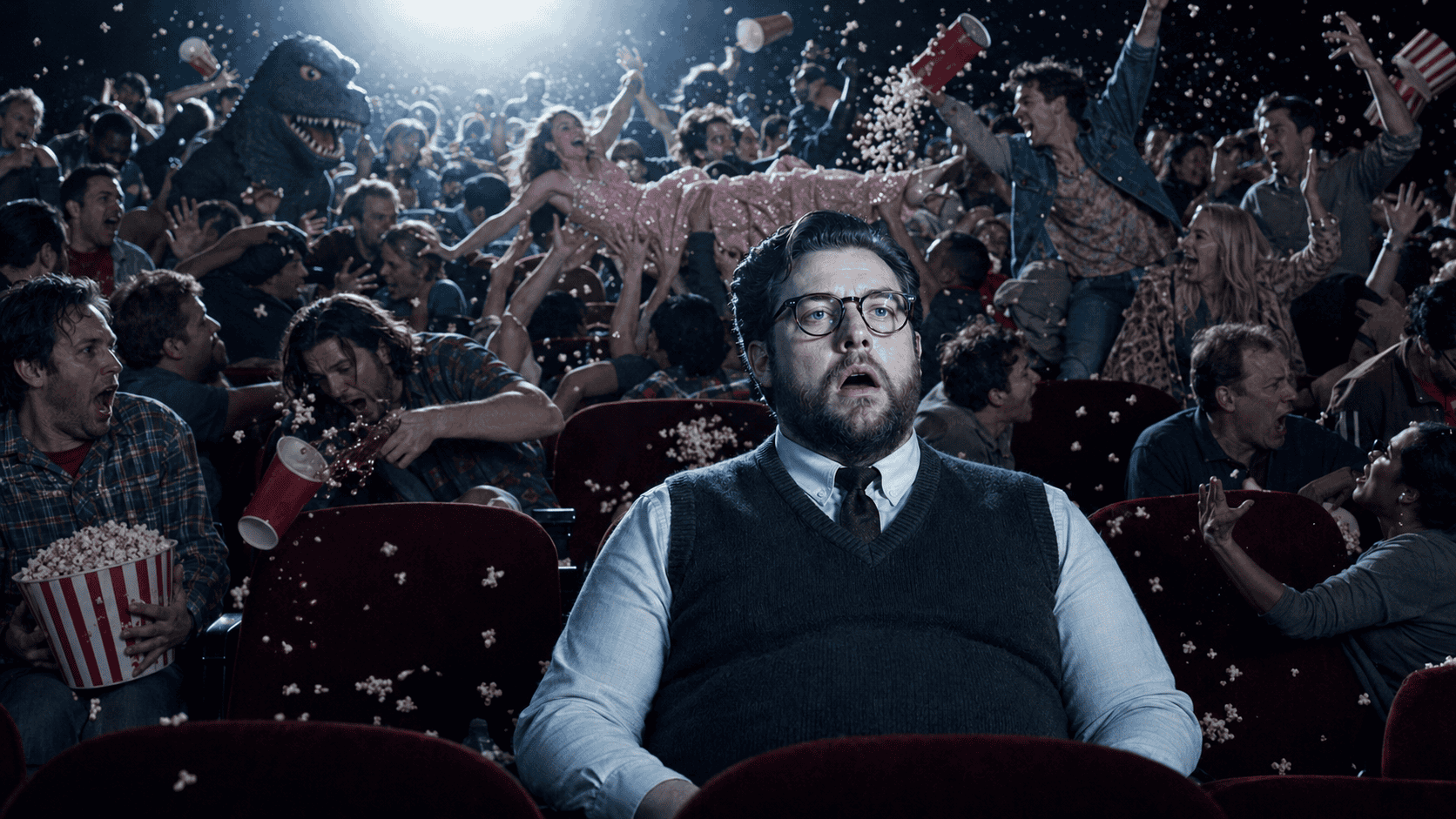
However, slop eaters aren’t the only problem. Because there’s another group doing far more to destroy everything you see on screens. They’re called Conseclods.
Conseclod is a term I just invented to describe someone who habitually ignores or dismisses the downstream consequences of actions, decisions, systems, or ideas, focusing instead on immediate gratification, appearances, craftsmanship, intentions, or other surface-level considerations.

Try saying it out loud; it’s a lot of fun. KON-suh-klod!
There are dozens of ways to describe someone who is overly focused on consequences, and they’re all derogatory. Maybe you’ve used some of them yourself. They’re terms like wet blanket, buzzkill, and Debbie Downer. Until this very moment, though, there wasn’t a single clear term to describe someone who doesn’t care about consequences at all, and they’re not only a far larger group but also a far bigger problem.
How Conseclods Are Ruining Movies
Conseclods are ruining the entire world around you in a wide variety of ways, but this is an entertainment site so let’s focus on how they’re ruining entertainment. They’re the people who, when someone raises an objection to the way the media we’re consuming might be negatively impacting our brains, make a non-argument like “lighten up” to shame reasoned critique.
Conseclods are obsessed with the craft of whatever they’re watching. Their thoughts on the content they consume are limited to how well-made it is, whether it elicits any emotions, and how much fun it is to watch. Those things are worth discussing, but given screens’ proven ability to influence people’s minds, they’re minor details in a much larger picture.
When a movie handles an idea recklessly, the Conseclod does not examine the criticism. He simply declares that criticism illegitimate. It is “just entertainment,” and therefore nobody has any right to ask what the entertainment encourages, excuses, celebrates, or makes emotionally appealing.
That gives filmmakers the perfect escape hatch. They can deliberately engineer every image, line, musical cue, and emotional payoff to manipulate the audience, then hide behind the claim that none of it means anything. If anyone notices what the movie is doing, the Conseclod arrives to accuse that person of taking movies too seriously.
This produces lazier storytelling. Writers no longer need to defend the ideas embedded in their work because Conseclods will insist those ideas do not exist. A filmmaker can glamorize cruelty, reward stupidity, romanticize dysfunction, or turn destructive behavior into heroic rebellion without ever confronting its implications.
Conseclods believe that if a movie does not instantly cause every viewer to copy its characters, they conclude that it influenced nobody. But entertainment rarely works that way. It shapes associations, expectations, sympathies, language, and perceptions gradually.
Conseclods somehow never make these same arguments about advertising. Everyone, even the Conseclods, admits that advertising on screens manipulates and influences people.
Studios spend enormous amounts of money placing products in movies because seeing something on screen can change how audiences feel about it. Nobody believes James Bond must stop the movie, stare into the camera, and order everyone to buy an Aston Martin before the placement counts as persuasion. Yet Conseclods pretend the same mechanism stops working when movies sell attitudes instead of cars.
Conseclods Are The Odyssey’s Primary Defenders

It’s happening right now with The Odyssey. The film’s director, Christopher Nolan, recently admitted in an interview with the UK’s Channel 4 that one of his primary goals in making the movie was to persuade his audience into abandoning what he deems as “cultural prejudice.” Nolan explicitly stated that he wants to “do away with some of those assumptions.”
Meanwhile, most of the attempts to discuss the way in which The Odyssey is doing this very thing are shut down by a flood of Conseclods who laugh at the idea and call the people engaging with it killjoys. Those same Conseclods then redirect the conversation to how cool the Cyclops looks.
Conseclodding lowers creative standards. Treating movies as meaningless distractions encourages disposable entertainment designed only to deliver familiar characters, easy stimulation, and temporary emotional release. If nothing on screen matters, then filmmakers have little reason to make anything thoughtful, coherent, truthful, or responsible.
The result of Conseclodism is entertainment that demands to be celebrated when it says something important but is declared meaningless when anyone challenges what it says. Filmmakers want the prestige of shaping culture without accepting responsibility for the culture they help shape. Conseclods create the cover that makes this possible.
By insisting nothing matters, Conseclods give the people making entertainment permission to stop caring about not only whether any of it is good but whether it’s good for you.