

On July 1st, 2026, Sony announced that by January 2028, it would be terminating the production of all discs for the PlayStation ecosystem. At first glance, one might shrug with casual indifference. After all, digital video game sales account for around 80% of sales on the PlayStation, up 70% since the days of the PS4. So the writing is on the wall, and for most, especially the younger generations, this news story is a non-issue, and I’ll likely be sounding like an old man yelling at the clouds. But I want to dive into why this is a terrible piece of news, not just for collectors, but gamers in general.
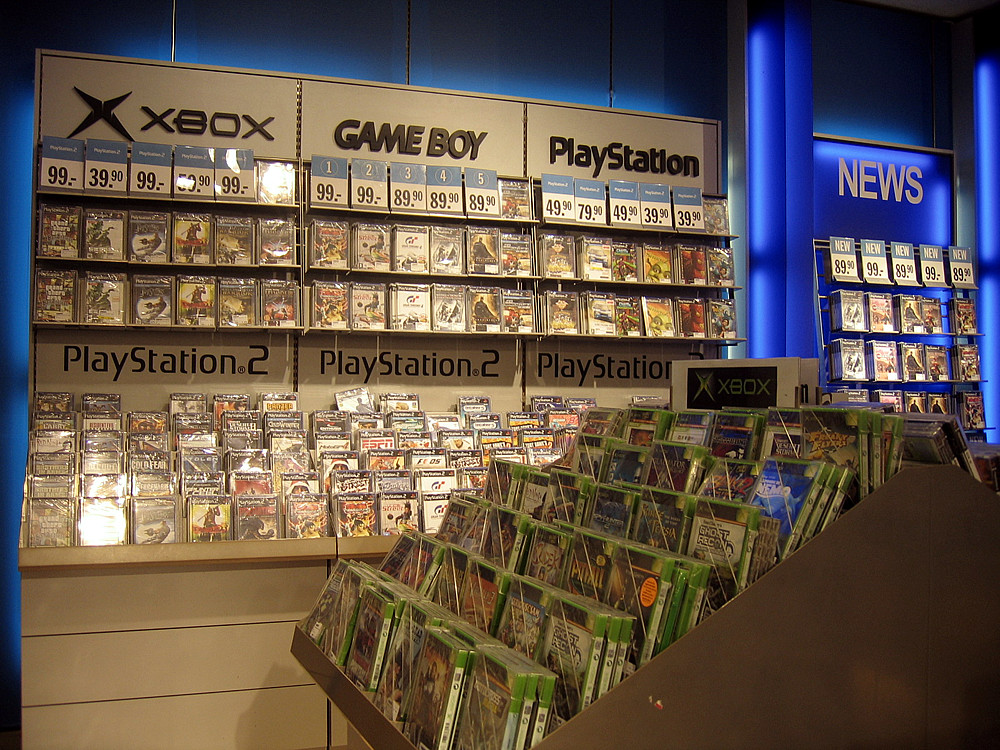
As mentioned, the video game industry has been pivoting aggressively towards an all-digital future already. It’s probably not a huge shock to learn that digital sales grew exponentially during the COVID-19 lockdown, when many retailers had to close down or limit their business. In order to get the games they needed to pass the time, many consumers opted to buy their games digitally. It’s the same game after all, right, and you don’t need to go to the store (or wait for it to be delivered). You just add it to the basket and click download. Quick and painless. Couple this with the rise of live-service games and platforms like Roblox, and you can see the writing on the wall. Couple that with the fact that many discs require you to download parts or the majority of the game from the internet before even playing it questions the role a physical disc even has today.
And yet despite that, the outcry against the death of physical media has been thunderous. Perhaps the biggest voice in the conversation, at the moment, is none other than Hideo Kojima himself, the creator of Metal Gear and Death Stranding. In a tweet, he stated:
“Whenever there is a major change or accident in the world, in a country, in a government, in an idea, in a trend, access to it may suddenly be cut off. We will not be able to freely access the movies, books, and music that we have loved. I would be a have-not. That’s what I’m afraid of. This is not greed.”
So people do seem to be angry about this decision, but why exactly, if this is a dying format as the sales data suggests?
Consumer Rights
The biggest hurdle I see with going into an all-digital future on the consoles is the monopoly that it will create. At the moment, gamers have choice when it comes to how they obtain their games. They can buy it day one from whichever store they want, in whatever format they want. But unless it’s one of the buzziest titles of the year, many consumers, especially in this day and age where everything is so expensive, will elect for a sale. That’s where the consumer choice comes in. Maybe you’ll find the game on sale at Walmart, or a local game shop, maybe Amazon has it on sale, or on the marketplace online. Maybe your friend will just lend you their copy since they loved it so much and they want to share that experience with you. Or maybe your economic situation requires you to seek out used games to save on costs, and if so, no shame in that either.
I buy games both physically and digitally, with the latter being simply because I found a good sale at that particular time. It’s not a format preference; it’s literally just about saving money. But I’ve also purchased games used or on a deep sale for the same reason. Sometimes, I’ll see a game, and it’s on sale at Walmart or Gamestop for, say, $29.99 CAD, but on the PS Store, at the same time, it’s $89.99. Why on earth would I buy it at full price, when I could get it at 50, 60, or even 70% off? Of course, by eliminating this market, the only winners are Sony (and inevitably Microsoft), who will see their bottom line grow thanks to this monopoly. And let’s not expect games to get cheaper while they ditch the physical component. The PS5 has already seen two price hikes in less than one year (August 2025 and April 2026), citing the rising costs of parts. Normally, consoles drop in price as they age out, but as RAM gets gobbled up by the rise of AI, demand for this part has created a shortage. So, not great for consumers.
And before you counter with the fact that the PC is a digital-only platform and has been for a long while, let’s bear in mind that on PC, there are multiple storefronts (Steam, GOG, Epic), and you can download your games to an external drive, keeping a copy as a backup. GOG put out a statement on the 1st as well, reminding consumers that if a game ever gets delisted from their storefront, the game won’t be deleted from your library, as you have access to your copy. You can mod the game as well, and Steam even allows for a refund after two hours of play, something Sony does not offer. You play a nanosecond, and the game is non-returnable on the PlayStation. So at least on the PC, you have more choice and more safety measures in place. It’s not perfect, but it’s better. And while owning a disc doesn’t mean you “own” the game (you don’t; you own your licensed copy), you are allowed to do more things with your copy with a tangible product.
And while Sony has stated that “physical” games will continue to be sold in 2028 and beyond, those new games will simply be empty boxes with a download code in it. Which begs the question, why even bother?
Owning vs Renting
The main issue with “buying” digitally is that you’re not really buying a copy of said piece of media; you’re buying a license to access it. At any time, as was the case earlier this week when Sony delisted over 550 movies from their library that were distributed by Studio Canal (and thus, the libraries of those who “bought” the movies), citing an expired license. So if you bought those movies in the past on this platform, which included the likes of Hot Fuzz and Terminator 2, they were removed from your collection, and you were not issued a refund, as you didn’t own a copy of the movie. When Ubisoft removed The Crew from existence and didn’t issue refunds, their response was simple: “players have a limited license to a game”. It’s basically like a long-term rental that may never expire, or could expire with barely any notice. So when you click “buy”, just bear in mind you’re not actually “buying” anything. So by forcing everyone on the console onto a digital-only storefront, you limit the ownership of everyone’s goods. And when those licenses expire, and trust me, they will, you’ll be locked out of your purchase.

As mentioned, I buy both digital and physical, but I have that choice, and I accept the realities of both. A disc can break; a digital game can be removed. But again, I have the choice. This act removes that choice and forces everyone into a state of non-ownership; in short, it’s the line “you’ll own nothing and be happy” coming to life. Shouldn’t consumers have the right to own the art they buy? And if they can’t, what’s the point of owning a console when you can pivot to a PC and at least be granted some more options and safeguards. The main drive for a console was that it was more affordable than a PC and that you can play it on a couch, but those justifications are almost in the rearview now.
Media is an interesting form of art in that it’s ever-changing. We still paint on canvas, but the way we consume movies has changed vastly over the generations. From Betamax to VHS, DVD, Blu-ray, 4K, and digital, we’ve had so many formats to choose from. But with the exception of the latter, you owned your copy of every format. You had to buy it over and over again if you wanted the best version available, but if you took care of your media, you had it. I still have a slew of DVDs that see regular rotation, and even have the original Star Wars films on VHS. No one can take those away from me, except due to my own negligence or wear and tear. An easier solution, that I think would quell a lot of anger and possibly fear in this digital future, would be to create legislation that would allow for digitally owned goods to be returnable and transferable, as if it were a physical good.

There’s also game preservation, which is an important aspect for keeping media alive as they age out of their systems. This is something that museums and historians are always adamant about in this ever-changing landscape, and feel it’s important to be able to access media from bygone eras still. And this issue isn’t limited to video games. Sony has a lot of say and control over Blu-ray and 4k discs, being a founding member of the BDA (Blu-ray Disc Association). How long until physical movies go the way of the dodo then?
What’s amusing, in all this, is that back in 2013, Microsoft and Xbox did a similar stunt when they issued that their games would always have online components. Sony, in turn, responded with a cheeky bit of marketing showcasing how easy it is to share games between friends on the PS4; one simply handed a disc to a friend. Easy! But you either die a hero, or live long enough to see yourself become the villain. Play indeed has limits.