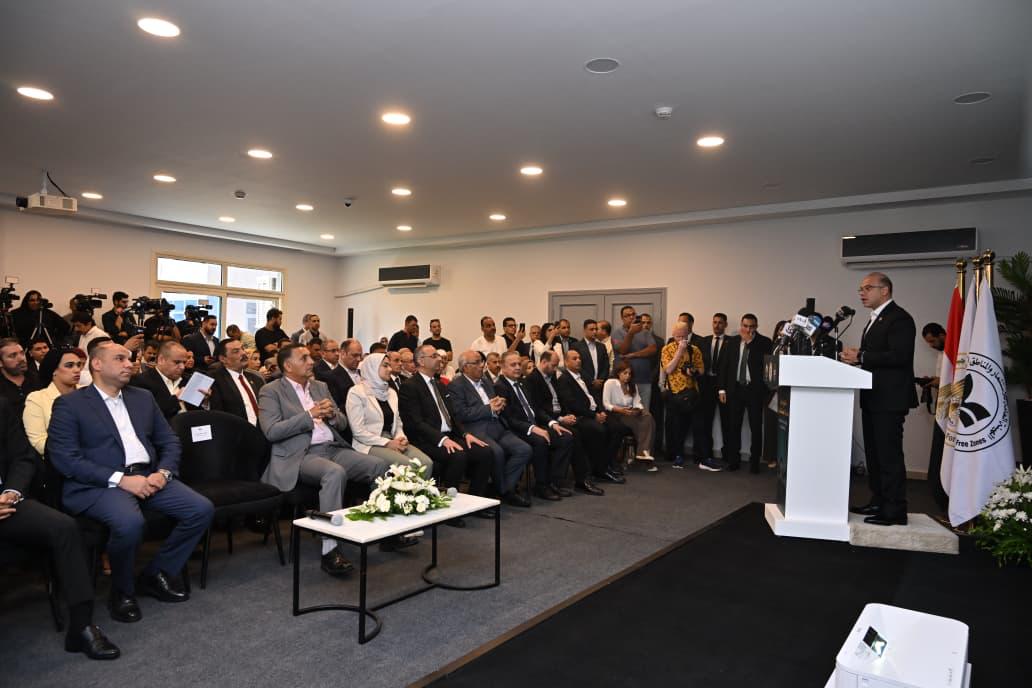
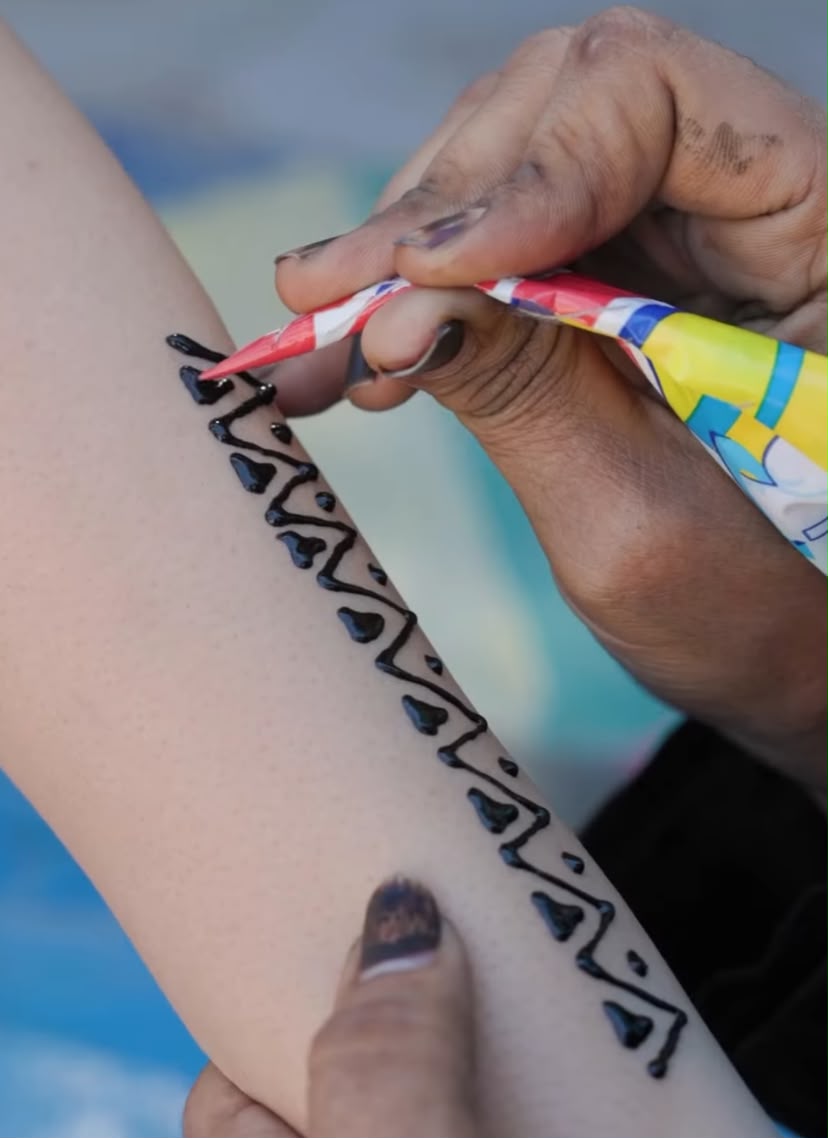
When tourists visit the gentle, sun-kissed beauty of Aswan, one of the most cherished experiences is stepping inside the warmth of a Nubian house. The door is adorned with geometric motifs of crescents and triangles, complemented by a strand of colorful beads that hangs softly against its surface.
The walls of the home come alive with striking Nubian art, featuring rhythmic diamonds and geometric motifs in vivid cobalt blue, bright orange, deep black, and white.
Nearby, coffee is traditionally served in a dark, matte-clay jug with a rounded base, then poured into a ceramic cup decorated with delicate palm-tree motifs. There is usually a hand-painted clay censer that rests on the right side of the tray, its surface adorned with hand-drawn chevron patterns.
Much of this visual language is born from the hands and imagination of Nubian women. Across generations, Nubian women have played an essential role in shaping the homes around them. With clay, straw, color, and imagination, they turn the simplest materials into expressions of beauty and belonging.
But, what if these symbols could travel beyond Nubia’s homes and villages? What if their patterns, colors, and stories could be reimagined through the language of modern luxury fashion, creating a bridge between heritage and contemporary design?
While ancient Egyptian motifs have long found their way into global fashion, from Dior to Balmain, a new generation of local luxury brands is beginning to look inward, turning its attention toward the living heritage of Egypt’s Indigenous communities.
Local Egyptian brands such as NUNIZ are helping to preserve Nubia’s cultural memory and visual language through their latest collection, Within the Nubian Walls, by collaborating with Nubian artists and artisans and translating their craftsmanship into contemporary forms.
The Uniqueness of Nubian Design
Tourism is, at its heart, an act of welcome; the art of opening one’s doors to strangers and, for a moment, making them feel like family.
This spirit lies at the heart of Nubian tourism, where visitors are not simply welcomed as guests, but invited into homes, shared meals, stories, and everyday moments, becoming part of the family, if only for a little while.
Translating this spirit of hospitality into fashion, NUNIZ founders Nadia Zarkani and Carole Nathan bring the essence of the Nubian experience into contemporary fashion, reviving traditional Nubian bags and charm bracelets as objects that carry the cultural memory of the communities from which they come.
What makes Nubian design particularly so distinctive is its refusal to be defined by a single set of characteristics. It carries a harmonious interplay of color, texture, shape, and pattern, each element speaking to the other.
It may appear at first as a collection of playful illustrations, yet it is also far more deliberate, revealing a sophisticated visual language shaped by rhythm, repetition, and balance.
Behind every motif lies hours of patient, meticulous craftsmanship, where intricate details come together to create designs that feel both spontaneous and considered.
“Nubian visual identity is truly unique; a burst of colors and shapes blended together to create an identity that speaks,” Zarkani and Nathan tell Egyptian Streets.
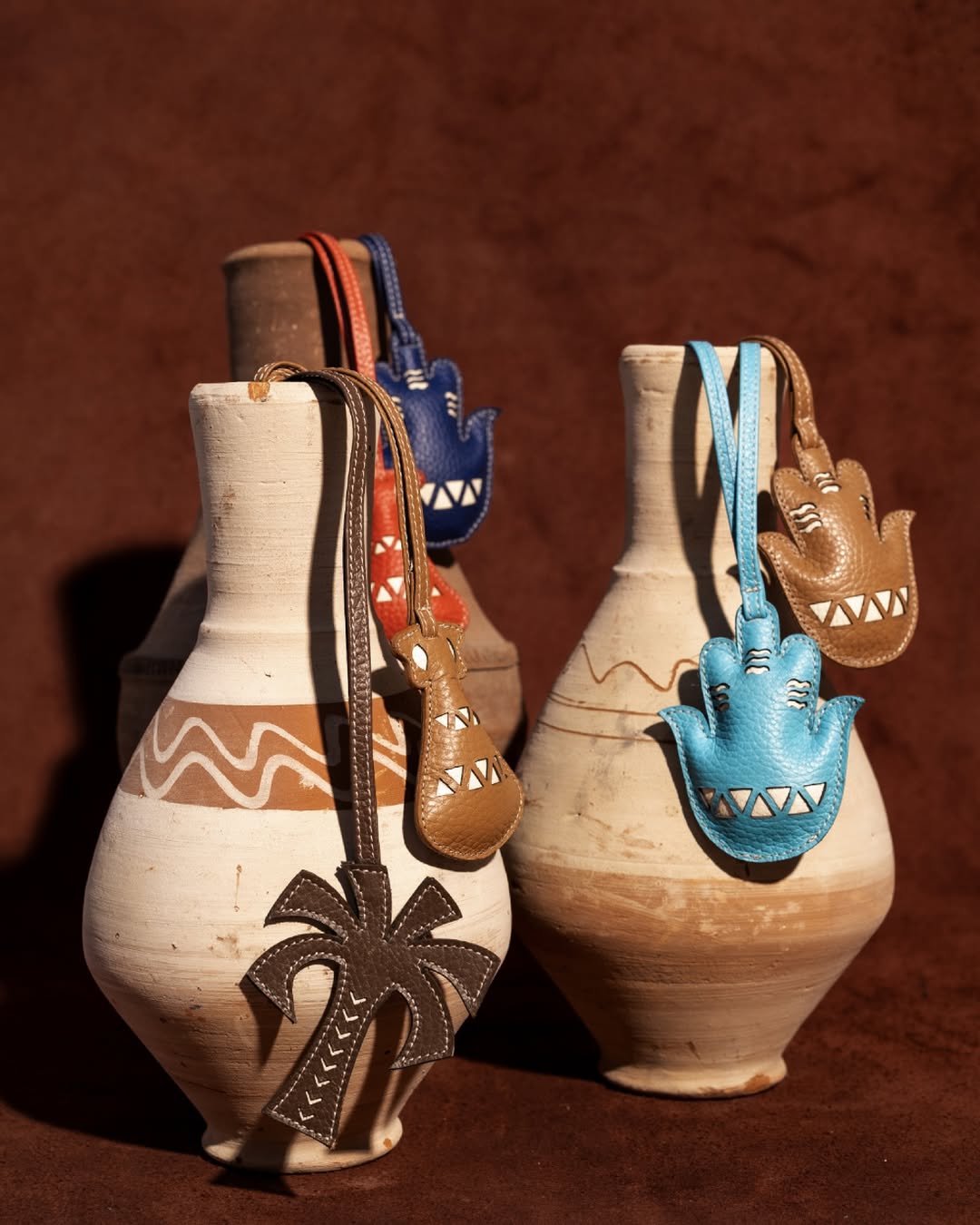
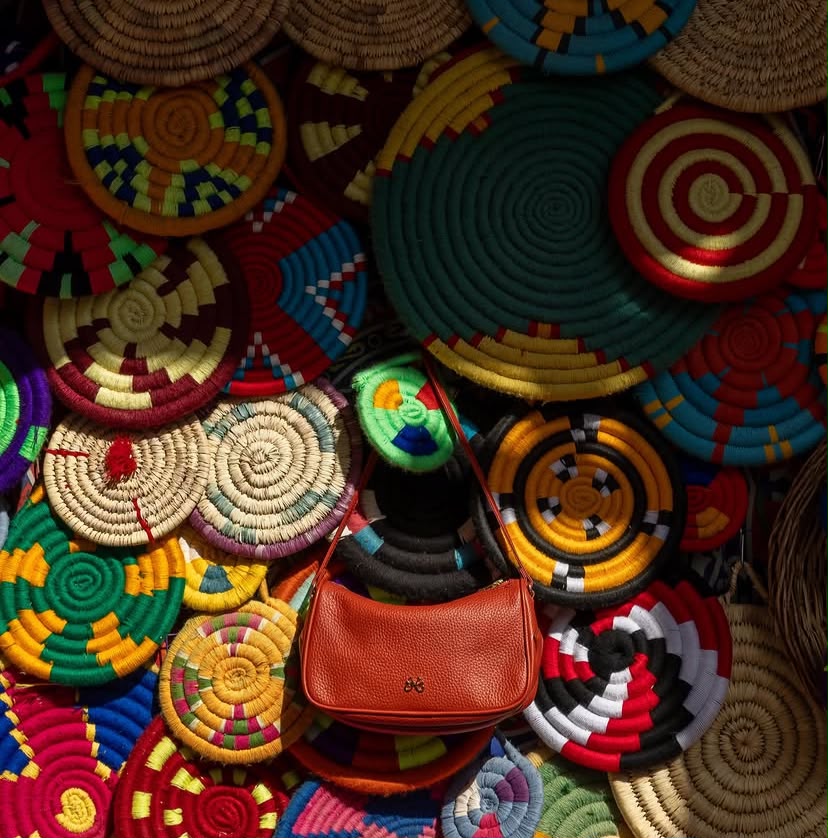
“These patterns give the identity its soul, serving as our instant inspiration for our strap collection. The geometric shapes in the Tayf strap blend patterns found on Nubian walls with our signature Nubian strap design.”
One of the most distinctive aspects of Nubian craft traditions is the use of potted plants, woven baskets, palm-reed objects, the marwaha (handmade fan), beaded wall hangings, and cotton yarn.
These elements are significant because they expand Nubia’s visual language beyond architecture and highlight the role of women’s domestic craft production.
The basket, in particular, is especially meaningful as it functions not only as a practical household object but also as a vessel of cultural memory and identity. Through its everyday use, it supports women’s domestic activities while simultaneously expressing Nubian aesthetics through geometric patterns, traditional techniques, and locally sourced materials.
The collection heavily reflects this aspect of Nubian women’s craft production, featuring natural raffia intertwined with fine-grained full leather, mirroring the traditional woven palm-leaf crafts, mats, and baskets found in Nubian homes.
“We wanted the collection to remain connected to its origins. We worked closely with local artists and residents to gain insight into their everyday lives, the colors that inspire them, and the patterns and designs that hold cultural significance,” Zarkani explains.
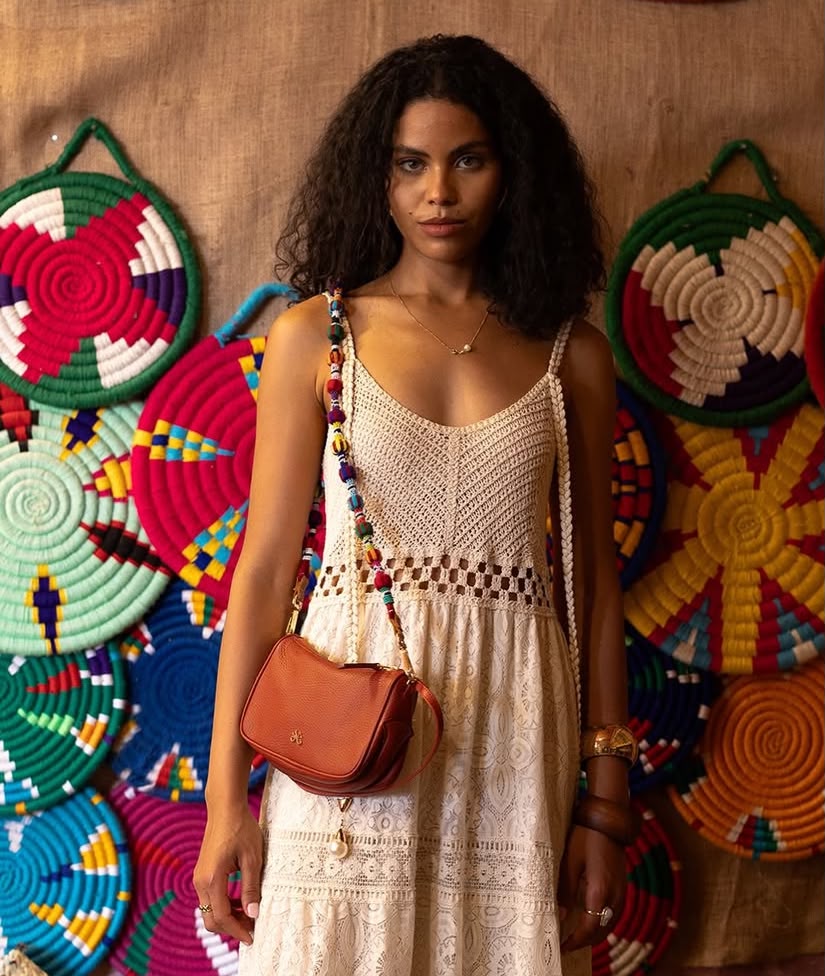
A signature highlight of the lineup is also the Nubian Strap, a thick bag strap adorned with traditional multi-colored beadwork, paying homage to the bold, geometric bead jewelry worn by Nubian women, adding texture and movement to structured leather silhouettes.
“Locals create a distinctive visual identity through vibrant colors, geometric forms, and intricate textures rooted in generations of artistic tradition. The palette reflects the crystal-blue Nile, Elephantine’s palms, and the warmth of the desert,” Zarkani adds.
As Egyptian interest in locally created designs rooted in Egyptian and Nubian heritage grows, designers like Zarkani and Nathan emphasize the importance of collaborating with local artists and ensuring their cultural heritage is represented ethically, respectfully, and authentically.
“Nubian artists are masterful raffia weavers, and their craft is a key texture in our summer collection. Our advice to designers is to always honor those who inspire them while adding their own creative touch, allowing their work to feel distinctive while remaining rooted in heritage,” Zarkani says.