
By Irfan Farooq
How an unforgettable Sunday at Lord’s in 1992 gave birth to the mythology of ‘unpredictable Pakistan’
In Pakistan, there was a time when tours of England were not treated as just another assignment on the cricket calendar.
For many supporters, contests against England carried an emotional significance that extended beyond the boundary rope.
Matches against India were shaped by the intensity of political rivalry and shared history but England represented something more layered.
Cricket had arrived in the subcontinent as part of the colonial experience, and for many Pakistanis of an earlier generation, defeating England on the cricket field retained echoes of overcoming an old hierarchy.
The British Empire had long disappeared, but some of its cultural shadows remained.
Victory in England, particularly at Lord’s, the symbolic home of cricket, carried a resonance that transcended the result itself.
For exclusive stories and all the detailed cricket news you need, subscribe to The Cricket Paper website, digital edition, or newspaper from as little as 14p a day
Expectations transformed
The 1992 tour unfolded against the backdrop of Pakistan’s greatest limited-overs triumph.
Only three months earlier, Imran Khan had led his “cornered tigers” to an improbable World Cup victory in Australia.
The success transformed the team into national heroes and reinforced Pakistan’s reputation as a side capable of the extraordinary.
The tournament had showcased everything that made Pakistan compelling: mercurial talent, youthful flair and an unwavering belief in their ability to recover from seemingly hopeless situations.
Yet hidden within that triumph was a characteristic that would come to define Pakistan cricket for much of the decade that followed.
The world admired Pakistan because they were capable of the unexpected. Before long, that quality would evolve into a label that accompanied them everywhere: unpredictable.
Expectations surrounding the England tour were therefore immense.
Pakistan were no longer merely a talented side with flashes of brilliance. They were world champions, carrying the hopes of a cricket-obsessed nation and eager to prove that their recent World Cup triumph was no fluke.
Newspapers followed every development of the tour, conversations revolved around team selection and strategy, and supporters believed that this gifted group of cricketers could conquer England in their own backyard.
A Test match with a split personality
Three months after Melbourne, Lord’s became the stage upon which Pakistan’s new identity began to take shape.
The second Test of the 1992 series between England and Pakistan is remembered today as one of the most dramatic finishes the ground has witnessed.
To those present, it was a thrilling contest that swung repeatedly between the two sides. To modern observers looking back, however, it feels like something more significant.
It was a match that encapsulated the contradictions that would define Pakistan cricket throughout the 1990s.
Within the space of a single Test, Pakistan displayed brilliance and vulnerability, dominance and disorder, control and chaos.
They appeared capable of winning comfortably, then seemed destined to lose, before somehow finding a route back to victory.
The curious thing is that Pakistan had largely controlled the match.
Wasim Akram and Waqar Younis arrived at Lord’s carrying questions about their fitness.
Wasim had missed the First Test because of shin trouble, while Waqar was only beginning to return to full strength after the stress fracture that had deprived him of participation in the World Cup.
Yet by the end of the match they had provided emphatic answers.
Together they dismantled England’s batting, collecting thirteen wickets and reminding everyone why they were rapidly becoming the most feared fast-bowling partnership in world cricket.
Their pace, swing and aggression transformed the contest and placed Pakistan in a position from which victory should have been little more than a formality.
England, however, refused to surrender.
After collapsing to 255 in the first innings, following an inspired spell by Waqar Younis, Graham Gooch’s side fought back repeatedly, and Devon Malcolm’s remarkable burst in Pakistan’s first innings prevented the visitors from building the commanding lead their position had promised.
By Sunday morning, thanks to a late burst of banana reverse swing from Wasim Akram, England again collapsed to 174, and the match remained delicately poised.
Even then, Pakistan’s task appeared straightforward enough.
Chasing 138 runs with ample time remaining, the world champions seemed destined to complete a routine victory and move on.
The collapse – and the redemption
What followed instead was the sort of collapse that would become painfully familiar to followers of Pakistan cricket over the next decade.
Ramiz Raja departed without scoring. Asif Mujtaba followed. Then Javed Miandad, the master of crises and architect of countless rescues, also returned to the pavilion with a duck beside his name.
Suddenly a chase that had looked uncomplicated became an exercise in survival.
Lord’s sensed the possibility of an extraordinary turnaround. England sensed victory. Pakistan, meanwhile, appeared determined to complicate matters in a way that only Pakistan could.
The scoreboard told a story that seemed impossible to reconcile with the talent available in the dressing room.
Yet that contradiction would become one of the defining features of the team throughout the 1990s: a side capable of producing genius and self-destruction in equal measure.
As wickets continued to fall and Pakistan slumped to 95 for eight, England stood on the verge of a famous victory.
The crowd had already experienced a day of dramatic twists, but few imagined the contest still had another chapter to offer.
What followed was not a display of elegant strokeplay or tactical sophistication. It was an exhibition of nerve.
Wasim Akram and Waqar Younis, the men who had placed Pakistan in command with the ball, now assumed responsibility with the bat.
Slowly, patiently and without panic, they chipped away at England’s advantage.
The pressure that had burdened Pakistan throughout the chase began to shift. Every run increased England’s anxiety.
Every over deepened the sense that another improbable escape was unfolding.
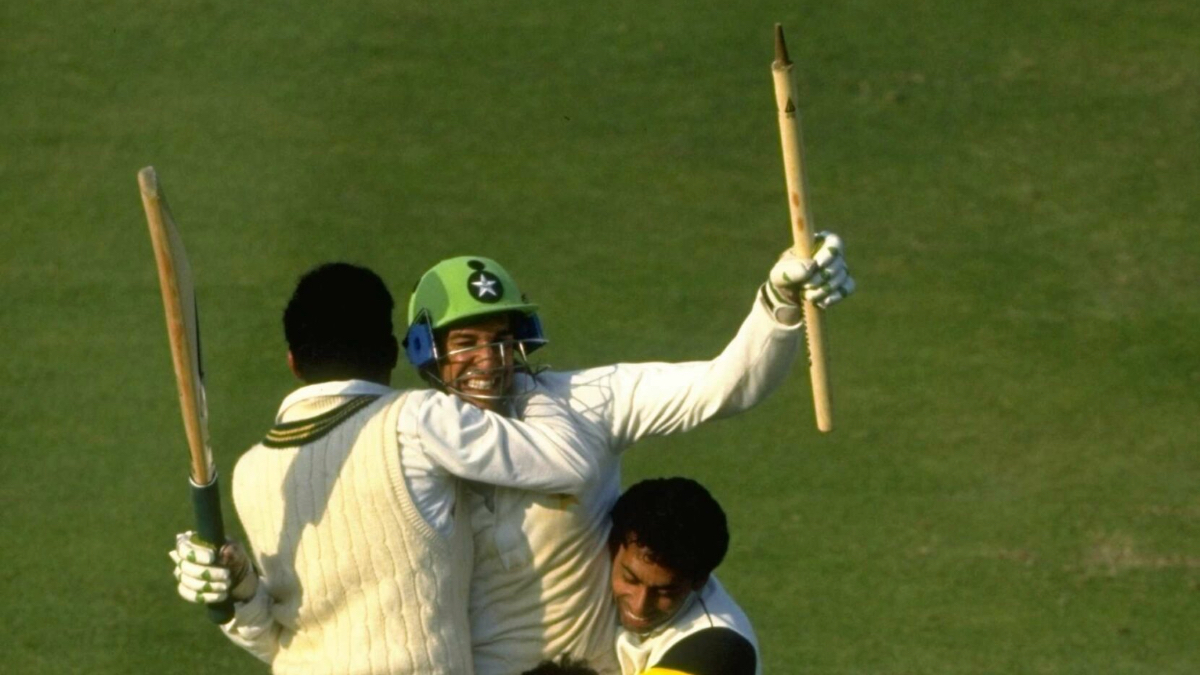
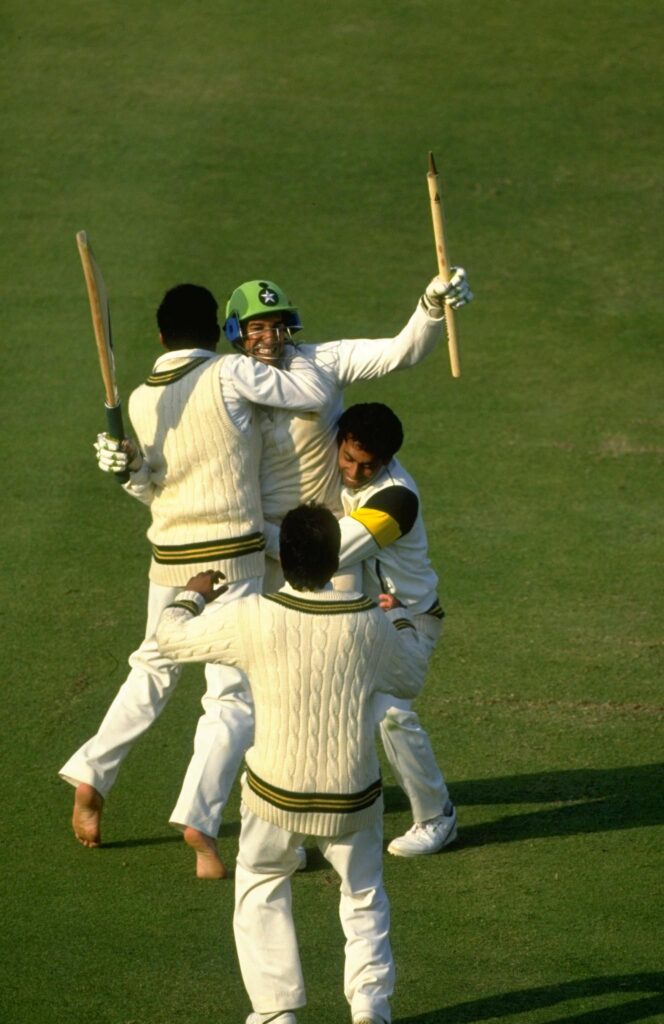
When Wasim eventually drove Ian Salisbury through the covers for the winning run, Lord’s erupted in relief, disbelief and admiration. Pakistan had secured a two-wicket victory.
A preview of an era
On one level, it was simply an outstanding Test match. On another, it felt like a glimpse into the future.
The qualities displayed that afternoon would accompany Pakistan cricket throughout the decade.
They would continue to produce players of extraordinary talent – they would continue to find themselves in situations of their own making.
They would continue to lose matches they should have won and win matches they should have lost.
Above all, they would continue to leave spectators unsure of what might happen next.
For that reason, the significance of Lord’s in 1992 extends beyond the result itself. The World Cup had announced Pakistan as champions. This Test helped establish their mythology.
It was the day the cricketing world began to understand that Pakistan would never be a team easily explained by logic or prediction.
Their greatest strength and greatest frustration were often the same thing.
Perhaps that is why the victory continues to resonate more than three decades later. It was not merely a thrilling Test. It was a preview of an era.
Within a single afternoon, Pakistan displayed the qualities that would define them for years to come: brilliance, vulnerability, resilience and chaos.
The winning run came from the bat of Wasim Akram. The reputation that followed belonged to an entire team.
Pakistan had arrived at Lord’s as world champions. They left as cricket’s most fascinating enigma.
READ MORE: Pakistan’s bad hair day and the saga of ’06 series against England
