
Many of those trying to bring the DNC chair down just want the party to continue to act as an ATM machine for their consultancies.

Ken Martin speaks at the 2026 California Democratic Party State Convention in San Francisco, February 21, 2026.
(Jeff Chiu / AP)
We write as longtime members of the Democratic National Committee who for decades have been fighting for deep reforms in how the party operates and the role that money plays in distorting our politics. Given this, one might think that we would be joining the chorus of those sniping at current DNC chair Ken Martin. We are not. We support Martin because, in a word, he’s a reformer too.
Later this week, when the party meets in Austin, Martin will present a comprehensive plan to ban “dark money, ” i.e., corporate and billionaire super PACs, from Democratic presidential primaries. If this plan passes, it will represent the most significant change in nominating the party’s presidential candidate in decades. (We have been involved in the crafting of this plan, and Martin has asked us to serve on a task force for its implementation.)
Getting the polluting impact of dark money out of our politics is a big deal. While it’s been a problem for years, it took Ken Martin to say “Enough!” and then get the ball rolling to do something about it.
Why, then, are there so many articles from non-DNC members decrying Martin’s year-and-a-half-long tenure? One such example appeared in a recent Wall Street Journal piece. Rufus Gifford, the 2024 finance chair for the Biden and Harris presidential campaigns, told the paper, “The two primary jobs of the Democratic National Committee are one, fundraising, and two, going on every form of media every day and messaging. If you cannot do those two things as DNC Chair, then you can’t do the job effectively.”
Gifford’s remarks might be considered more than a bit cheeky coming from an official in the campaign that spent well over one billion dollars and lost to Donald Trump. More to the point, however, his comments display a lack of understanding of the role of the Democratic Party and its chair. To be clear, Martin has been raising money—at a better clip than other chairs in the first two years after losing the White House. And he has been doing quite a bit of media. Unfortunately, because his detractors have made a mission of tearing him down, Martin’s appearances have all too often been focused on defending the DNC and his goals for the party.
The Democratic Party which Martin inherited was in disarray. During the past several decades, America has witnessed the devolution of both major political parties. Instead of being entities that organized and mobilized voters to win elections, they had become hollowed-out fundraising vehicles for campaigns and the consultants whom they hired.
Current Issue
While consultants became the main beneficiaries of the billions raised and spent in each election cycle, state parties were starved for cash. The consultant groups even received contracts from campaigns to hire canvassers, from other states, to go door to door in critical districts—a function that had traditionally been performed by locally elected precinct captains. But because organizing the state parties had been deprioritized in favor of shipping off funds to consultant groups, the parties got weaker and consultants got richer.
After having served as chair of the Minnesota Farm Labor Party for 14 years and for eight years as the president of the Association of State Democratic Committees, Ken Martin was easily elected by the members of the DNC who shared his commitment to rebuilding the party from the bottom up and channeling more DNC funds to state parties instead of the consultant groups.
Including his time as head of the ASDC, the amount of money that the DNC sends to state parties has quadrupled—now totaling over $1 million per month. As a result, many states have been able to open regional offices and hire more on-the-ground staff.
Martin has also pushed for and won support for other reforms that contribute to making party operations more financially transparent, accountable, and democratic. Many of these changes were in evidence at the last meeting of the DNC. There was, for example, a detailed presentation and discussion of budgetary matters—something we reformers had long sought. Instead of the normal practice that allowed the chair to appoint all at-large members to the DNC and hand-select members of the decision-making standing committees, Martin introduced a reform that empowers the membership to select and elect some of the at-large and committee positions. Martin also implemented neutrality for party officers in the nominating process. While more can be done, these initial steps are consequential.
Over decades, issues of controversy have rarely been debated and then voted on by the full membership. Someone once described being a DNC member as akin to going to church, where congregants learn when to stand up, sit down, clap, and leave—and to never ask tough questions. This is no longer the case.
At the last meeting’s general session there were two amendments introduced seeking to modify Martin’s resolution to ban dark money. In earlier years, these efforts never would have been recognized or, at minimum, ruled out of order. Martin heard them out. They were debated from the floor. One was defeated and one was passed.
We know that many of those who are creating the campaign against Martin are those who opposed his candidacy and have the most to lose from the changes he is implementing. They want the party to continue to act as an ATM machine for their consultancies. Instead, Martin wants to build and democratize the party—and that is what all Democrats should be supporting.
More from The Nation
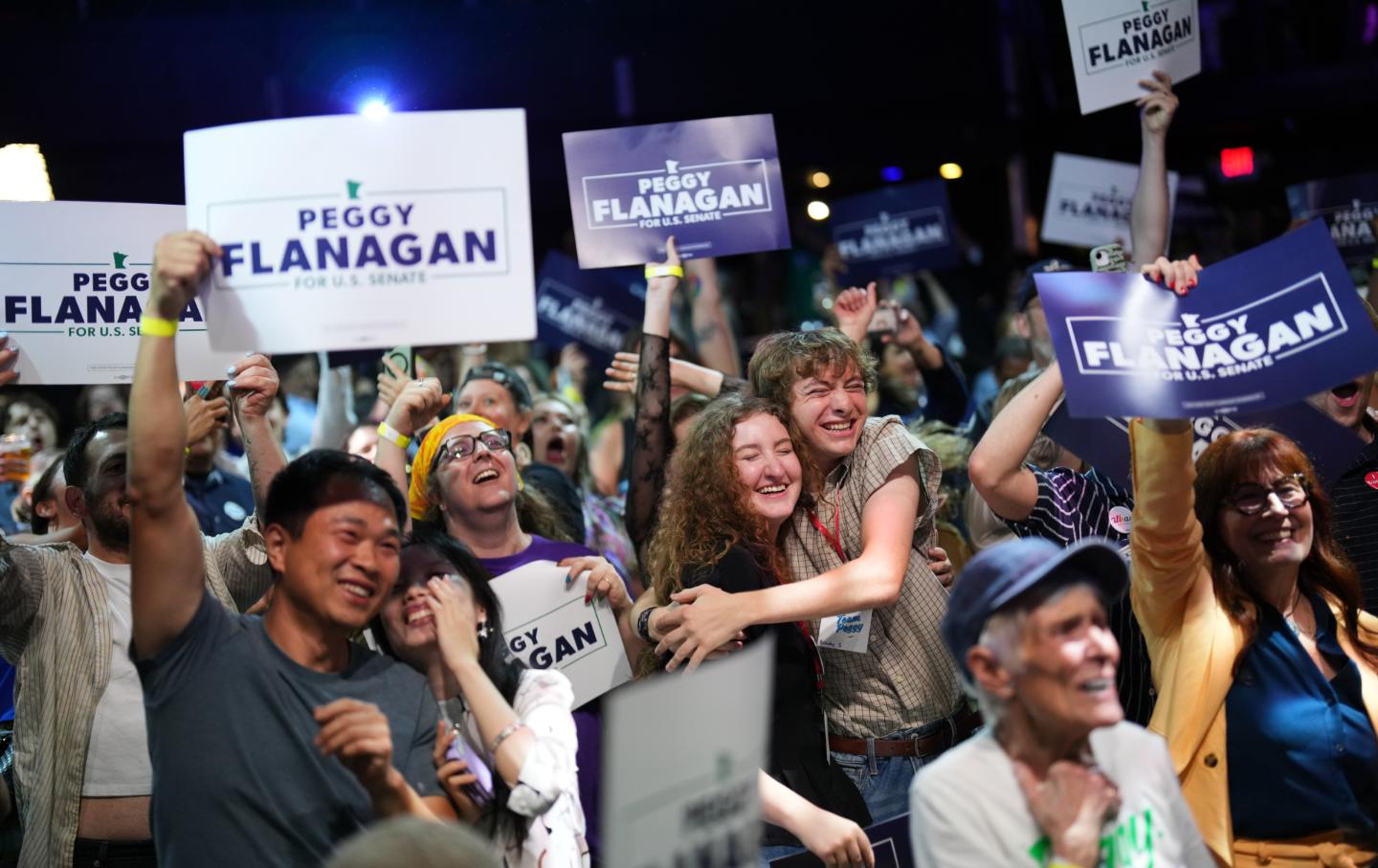
Corporate Dem Rep. Angie Craig outspent Flanagan by roughly 4-1. But Flanagan’s ground game, and her promise to “avenge Minnesota” after ICE’s cruelty, gave her a 20 point win.

From frontline organizing to political commentary, her fierce, multiracial advocacy reshaped 20th-century liberation and continues to inspire social justice.
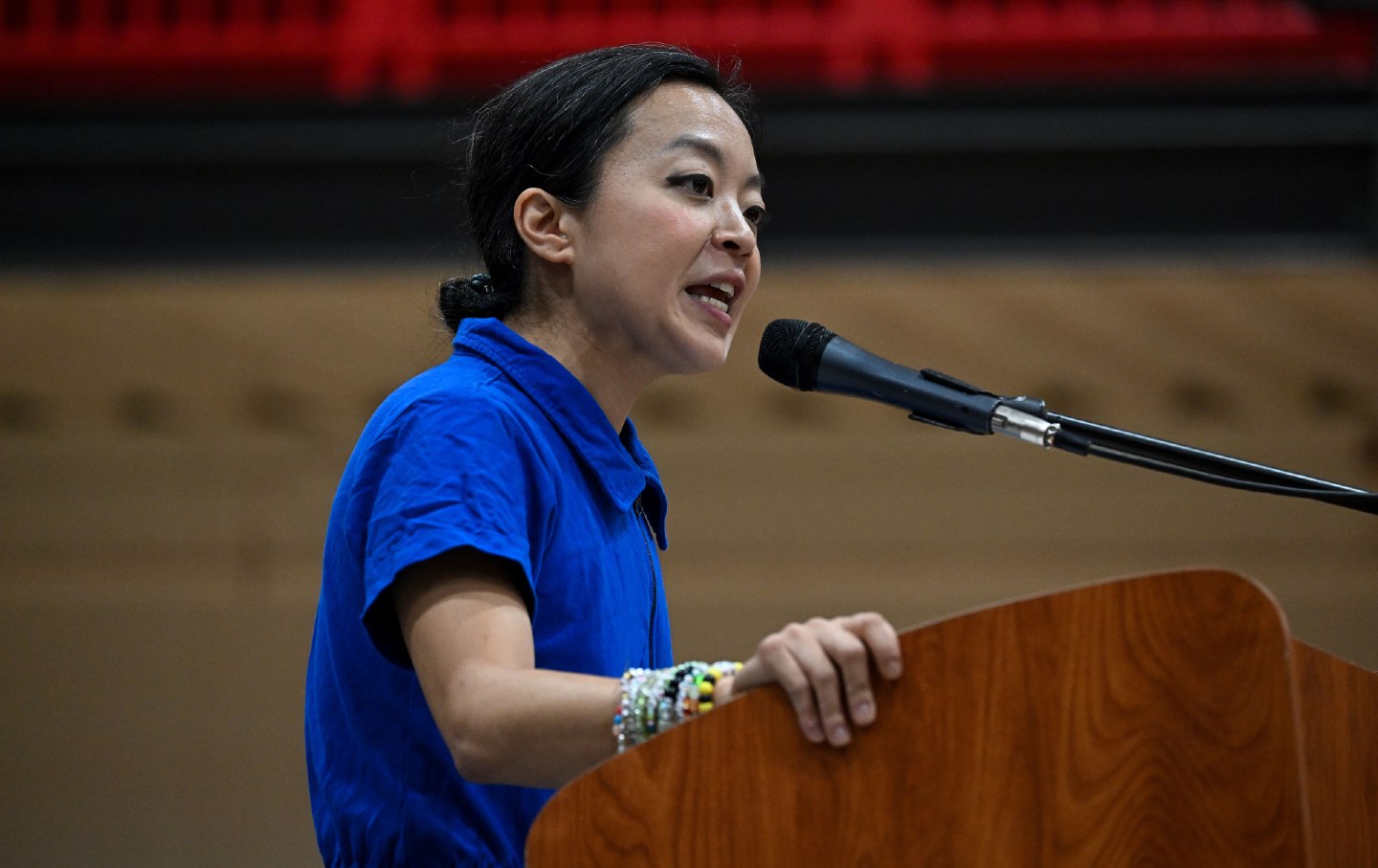
Long before Francesca Hong’s current bid for governor, the party was revitalized when it nominated a Milwaukee “sewer socialist” for governor.

An unprecedented number of candidates in this year’s midterms are running outside of the two-party system. What’s more, a lot of them could win.

At a time when the US president is actively interfering in elections, these groups, activists, and officials are protecting their local systems from federal sabotage.