
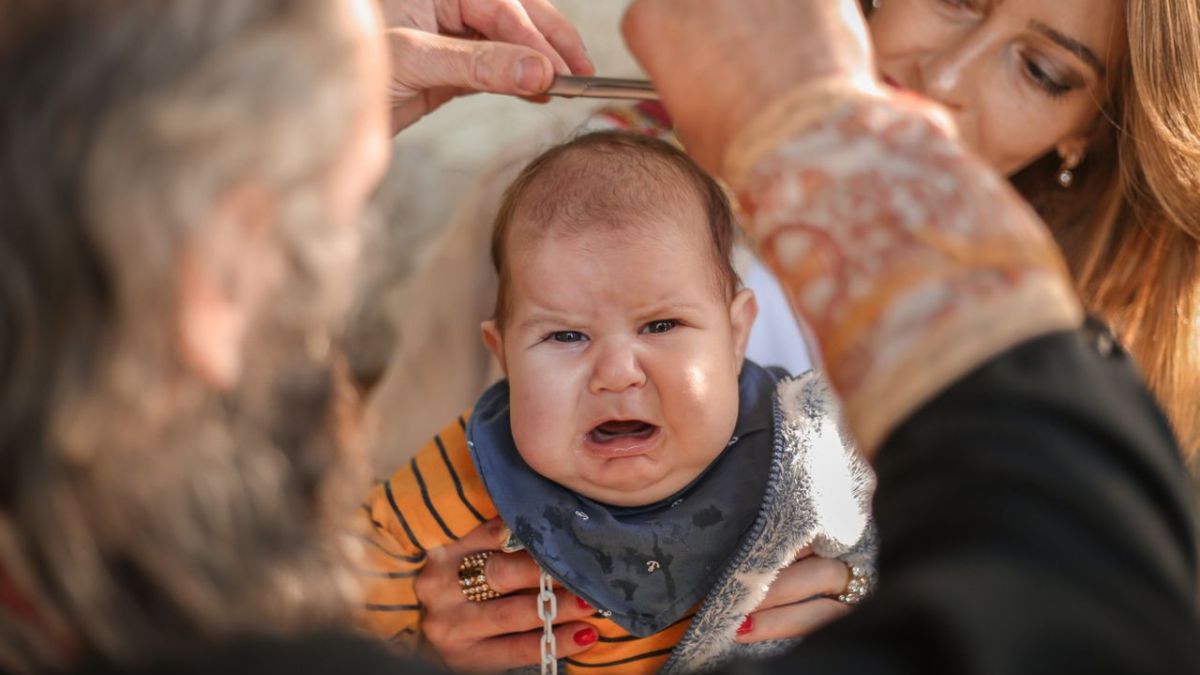
Apparently, somewhere, somebody has been claiming that neonatal male circumcision causes autism spectrum disorder. Rather than immediately dismissing this unusual idea, a team of paediatricians and epidemiologists based in the USA tested the hypothesis thoroughly and found it easy to disprove. They published the results of the study in JAMA Pediatrics, a well respected medical journal with thorough peer review.
Child health experts led by Johns Hopkins Professor, Dr Monica McGrath, set out to find out if there is a correlation between male autism spectrum disorder diagnoses or autism-related traits and being circumcised as an infant.
What does this mean? They looked at the medical records of a bunch of male children enrolled in the Environmental influences on Child Health Outcomes (ECHO) Program to see whether kids with an autism diagnosis were more likely to have been circumcised as an infant than not. The ECHO Program is a US government-sponsored research consortium that combines 69 cohort studies tracking children born across the USA.
They did not find a relationship between circumcision and autism spectrum disorder or autistic traits.
A Careful Study Design
This was a very thorough analysis because the researchers wanted to give the idea a fair craic. This meant that when they were designing the experiment, they considered confounding factors that might mask a very subtle relationship. The major confounding factors included genetics and differences in diagnosis and assessment methods.
They excluded boys from multiple births and boys with siblings because autism has a strong genetic element. If two boys from the same family were both signed up for the ECHO cohort study, are both autistic, and they are both circumcised due to family tradition, it would interfere with the analysis. How could the team know how much was down to shared genes and how much was because of circumcision?
The investigators avoided this by excluding boys with siblings from the study.
Accounting for Other Influences
The next complicating factor rested on how each health care centre tests for autism. Different testing methods or training might produce disparities in test scores reflecting variations between health care providers more than real differences in autistic traits.
The team needed to be able to ensure that they had lots of boys assessed at each health care site to make sure that if there were differences caused by the location, it wouldn’t hide any association between circumcision and autism. To avoid this problem, they included a minimum of twenty boys with an autism diagnosis and circumcision data from each eligible location. This meant they had fourteen clusters of boys diagnosed at the same place.
The team assessed several factors in addition to checking whether there was a relationship between autistic trait scores and neonatal male circumcision. These factors include preterm birth, drugs used during the circumcision procedure, maternal education, maternal age, paternal age and a family history of autism. These are all factors that might affect a child’s statistical odds of being autistic that could hide a relationship between circumcision and autism.
The researchers classed children as being autistic if their parents reported a diagnosis using the Autism Diagnostic Observation Schedule [ADOS]/ADOS-2 or Autism Diagnostic Interview-Revised [ADI-R]. They also used the Social Responsiveness Scale, 2nd Edition (SRS-2) to quantify autistic traits and severity so that they could see if circumcision made a difference to that.
Between 2003 and 2025, 37,102 male infants participated in the ECHO cohort study. Of those, 2771 had an autism diagnosis and were from a single child family and were diagnosed at one of 14 sites.
How did circumcision status affect autism diagnoses?
Once the researchers had selected which boys were eligible to take part in the experiment, they started their analysis.
Of the 2271 boys, 1840 were circumcised shortly after birth (66%) and 192 eventually got an autism diagnosis (7%). Nearly all the kids were born at full term (92%), to mothers of an average age of 31. Their demographics skewed towards educated, with 68% of mothers holding a college degree and came from a US representative mix of racial and ethnic backgrounds.
Now for the important result. Out of 1840 circumcised boys, 6% claimed an autism diagnosis compared to 9% in the uncircumcised group. When the team did a basic statistical test, they found that, if anything, being circumcised reduced your odds of being diagnosed with autism spectrum disorder. This isn’t a prompt to get your son circumcised to avoid autism, however. Once the they factored in other covariates, this difference disappeared.
Boys who are circumcised are no more or less likely to have an autism spectrum diagnosis than boys who are ‘intact’.
Exhaustive Testing
Next the researchers checked Social Responsiveness Scale scores and Child Behavior Checklist scores against neonatal male circumcision. Again, they found no relationship between whether a boy was circumcised and how severely affected by autism spectrum disorder he was.
In almost every analysis they tried, the epidemiologists failed to uncover a scenario where circumcision affected autistic traits. The exception was a single case where circumcision was negatively correlated with scores at one particular site.
While the authors make boilerplate statements regarding the limitations of this study, it seems pretty clear. If you are looking for a link between autism and male circumcision, you will need to work really hard to detect one if it exists.
It is tough to imagine how having your foreskin removed would cause autism in the first place. Perhaps people are worried that the pain killers used on the infants might trigger some neurodevelopmental issues? In this analysis, the researchers don’t seem to have found any inverse relationship between the use of a particular analgesia or numbing agent and an increase in the odds a boy will go on to be diagnosed with autism spectrum disorder.
Sources
McGrath M, Li X, Jacobson LP, et al. Neonatal Medical Male Circumcision and Child Autism Diagnosis. JAMA Pediatr. Published online August 3, 2026. doi:10.1001/jamapediatrics.2026.3239
Blaisdell CJ, Park C, Hanspal M, et al. The NIH ECHO Program: investigating how early environmental influences affect child health. Pediatr Res. 2022;92(5):1215-1216. doi:10.1038/s41390-021-01574-8
Media H. Circumcision May Double Risk of Autism. Psychiatry Advisor. January 10, 2015. Accessed August 5, 2026. https://www.psychiatryadvisor.com/home/topics/autism-spectrum-disorders/circumcision-may-double-risk-of-autism/